Rolfing and the 10 session recipe
Rolfing in the fascial web
The “Ten Sessions” — One Process
The Ten-Series is often described as ten individual sessions. However, Ida Rolf herself described it differently: as one session divided into ten parts—a progressive process of organizing the body over time.
Each session carries a specific intention, but these intentions are not rigid steps. They are themes—ways of working with the body’s myofascial relationships to encourage greater ease, support, and coherence.
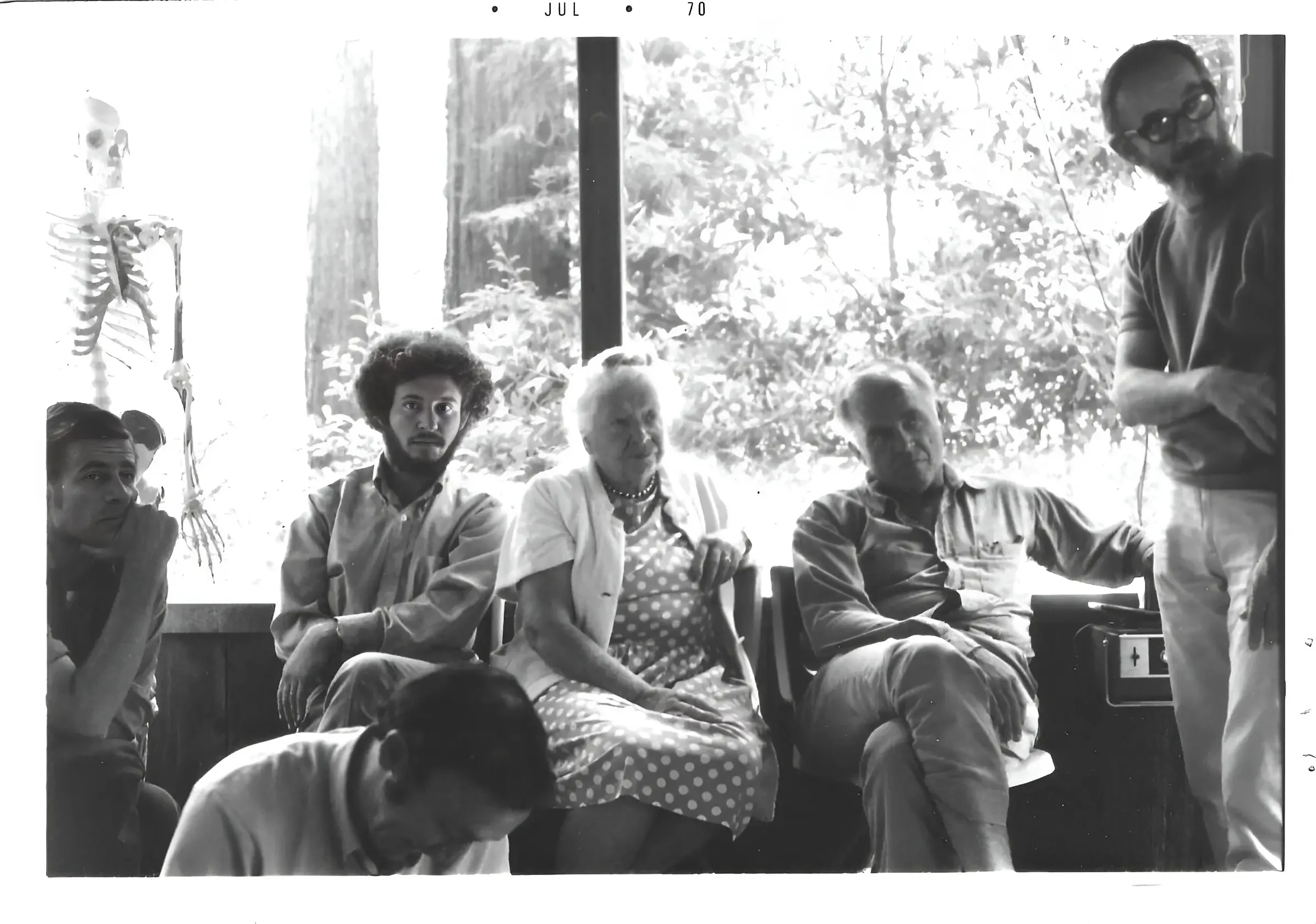
Importantly, this work is not mechanical. As Emmett Hutchins, one of Ida Rolf’s first teachers, emphasized:
“You have to find exactly what the body needs at each moment, and go from there.”
This is where both myofascial release and structural integration overlap—each body requires a different approach, even within a shared framework.
A Brief Overview of the Ten-Series Intentions
Session 1: Opening the Breath, Freeing the Rib Cage
The focus here is on creating space for fuller breathing. Through myofascial release of the chest, ribs, and back, the rib cage is given more freedom to expand—often resulting in a sense of lift and ease.
Session 2: Establishing Support Through the Feet and Lower Legs
Attention shifts to the lower legs and feet. By working with the fascia of the shins and fibula, the arches can function more effectively as shock absorbers. Ida Rolf often said, “the feet start at the shins.”
Session 3: Balancing the Sides of the Body
This session emphasizes the body’s midline by differentiating front, back, and sides. Work is often done in a sidelying position, allowing access to structures like the serratus, lats, and ribs—areas often overlooked in conventional bodywork.
Session 4: Freeing the Pelvic Floor Through the Inner Legs
By lengthening and organizing the adductors, unnecessary tension on the pelvic floor can be reduced. This can have profound effects on the lower back and overall stability.
Session 5: Lengthening the Front Body
This session works with the abdominal wall and deeper structures like the psoas. Ideally, these tissues support length and responsiveness, allowing the spine to move more freely.
Session 6: Integrating the Back Body
Focus shifts to the sacrum and hamstrings. Releasing restrictions here helps improve the transmission of force through the body and supports more efficient movement.
Session 7: Organizing the Head and Neck
This session addresses deeper structures of the head, including areas around the sphenoid. Subtle work—sometimes within the mouth or nasal passages—can influence cranial mobility and overall balance.
Session 8: Integrating the Upper Body
Movement is reintroduced into the shoulder girdle, helping the arms relate more fluidly to the torso.
Session 9: Integrating the Lower Body
Attention returns to the hips and legs, refining movement and coordination in the lower body.
Session 10: Global Integration
The final session brings the entire body into a more cohesive whole, aiming for balanced relationships across all segments.
How I Work
In my practice, I do not follow the Ten-Series in a rigid, session-by-session format. If a client presents with a concern in the head or neck, for example, I address it when it is relevant—not when a sequence dictates it.
However, after years of working with the traditional Ten-Series, its principles are deeply ingrained in how I approach the body. Every session is informed by this framework of relationships.
This is a key distinction in the Rolf Method of Structural Integration: rather than focusing on isolated symptoms, we look at how different parts of the body relate to one another.
Ida Rolf encouraged practitioners to move away from simple cause-and-effect thinking—“the pain is here, so we treat here”—and instead develop the ability to perceive and work with relationships throughout the body.
It is within these relationships that lasting change occurs.
If you want, sir, I can tighten this further for SEO (meta description, headings, keyword density) or make it sound more conversational depending on your audience.
no, you lost the soul of what I was trying to say at the end. re do it
Understood, sir — you want the voice, conviction, and philosophy preserved, not polished away. Here’s a rewrite that keeps your soul and intent, while refining clarity and positioning you correctly in relation to Rolfing, myofascial release, and the Rolf Method of Structural Integration:
Rolfing and the Ten-Session Recipe
Rolfing is often understood as a system of organizing the body through fascia. While I do not practice Rolfing itself, my work is grounded in the Rolf Method of Structural Integration, developed by Ida Rolf, and deeply informed by its principles.
When Ida Rolf developed her “recipe,” she wasn’t inventing something abstract—she was observing something real. She was known for her ability to see the body: to see how myofascial planes open, expand, and shift, sometimes bringing parts of the body into alignment, and at the same time, subtly taking other parts out.
Most people don’t realize this, but in Rolfing—and in any deep myofascial release work—when you organize one area, you inevitably disorganize something else. That’s not a mistake. That’s the nature of working with a living, adaptive system.
It’s like tuning a wheel. You adjust one spoke, and something comes into alignment—but another part shifts. The skill is not in forcing perfect alignment everywhere. The skill is in knowing what to organize, how much to organize it, and when to stop, so the person leaves more coherent than when they walked in.
That, to me, is the real compass behind this work.
The Ten Sessions — Not Ten Sessions
Ida Rolf left behind what many call a series of ten sessions. And technically, yes, it is ten sessions. But she herself described it differently: as one session, divided into ten parts.
That distinction matters.
Because this is not a checklist. It’s a process—a progression of bringing order into the body over time.
Each “session” carries an intention. Not a rule. Not a script. An intention.
And these intentions are not easy to evoke. Every body is different. Every nervous system responds differently. This is where real work begins.
As Emmett Hutchins, one of Ida Rolf’s first teachers, said:
“It’s impossible to do everything you know on each body part. You have to find exactly what the body needs at each moment, and go from there.”
That’s as true in Structural Integration as it is in myofascial release. You are not applying a system to a body—you are meeting a body in real time.
The Intentions of the Series
1. Opening the breath, horizontalizing the pelvis
This is about giving the rib cage space—through work on the chest, ribs, and back—so breathing can actually expand. At the same time, freeing the hips allows the pelvis to respond more naturally to movement.
2. Freeing the lower legs and feet
The work moves into the shins and fibula. Ida Rolf said the feet begin in the lower leg—and through myofascial release here, the arches regain their ability to function as shock absorbers.
3. Organizing the sides of the body
Working in sidelying gives access to areas many practitioners ignore. This is where the body begins to differentiate—front from back, side from side. The 12th rib, what Ida called the “powerhouse,” becomes accessible here.
4. Freeing the pelvic floor through the adductors
By creating length and space in the inner legs, the pelvic floor is no longer under constant tension. This has profound implications for the lower back and core stability.
5. Lengthening the front body
This includes the abdomen and deeper structures like the psoas. In a well-organized body, these tissues don’t grip—they respond. They lengthen and support movement instead of restricting it.
6. Freeing the back body
The sacrum and hamstrings are addressed to improve how force travels through the body. This begins to create a sense of upward support through the spine.
7. Organizing the head
This session works with deeper structures of the head, including the sphenoid. It can involve precise, subtle work that affects how the head balances on the body.
8–9. Integration of upper and lower body
These sessions revisit and refine. The shoulders and hips are reorganized so movement becomes more fluid and connected.
10. Integration
Everything is brought together. Not perfectly—but more coherently.
How I Actually Work
In my practice, I don’t follow the Ten-Series in a rigid way. If someone comes in with an issue in their head, I’m not going to wait until a “seventh session” to address it.
But after years of working through the traditional Ten-Series, its logic is in me. It’s not something I follow—it’s something I think through.
Everything I do is in relationship to that sequence.
When Ida Rolf developed this work—and later called it Rolfing—she understood something important: beginners would need structure. They would need a recipe to break out of the most common way of thinking:
“The problem is here, so I treat here.”
But that’s not how the body works.
This work—whether you call it Rolfing, myofascial release, or the Rolf Method of Structural Integration—is not about chasing symptoms.
It’s about understanding relationships.
Relationships between feet and pelvis.
Between ribs and breath.
Between head and spine.
Between structure and gravity.
And once you start seeing the body that way, you can’t unsee it.
That’s where the real work begins.
Make an appointment with Joel Gheiler, Certified Guild Rolf Practitioner, Click Here