Structural Integration vs Rolfing in Boston
Rolfing in the fascial web
Structural Integration vs Rolfing in Boston
If you’ve been searching for Rolfing in Boston, you’ve likely come across different schools of thought—most notably the Rolf Institute and the Guild for Structural Integration. From the outside, they can seem similar. Both come from the work of Dr. Ida Rolf. But in practice, the differences matter—and they directly affect the kind of results you get.
The Origins of Rolfing®
In the beginning, there was no divide.
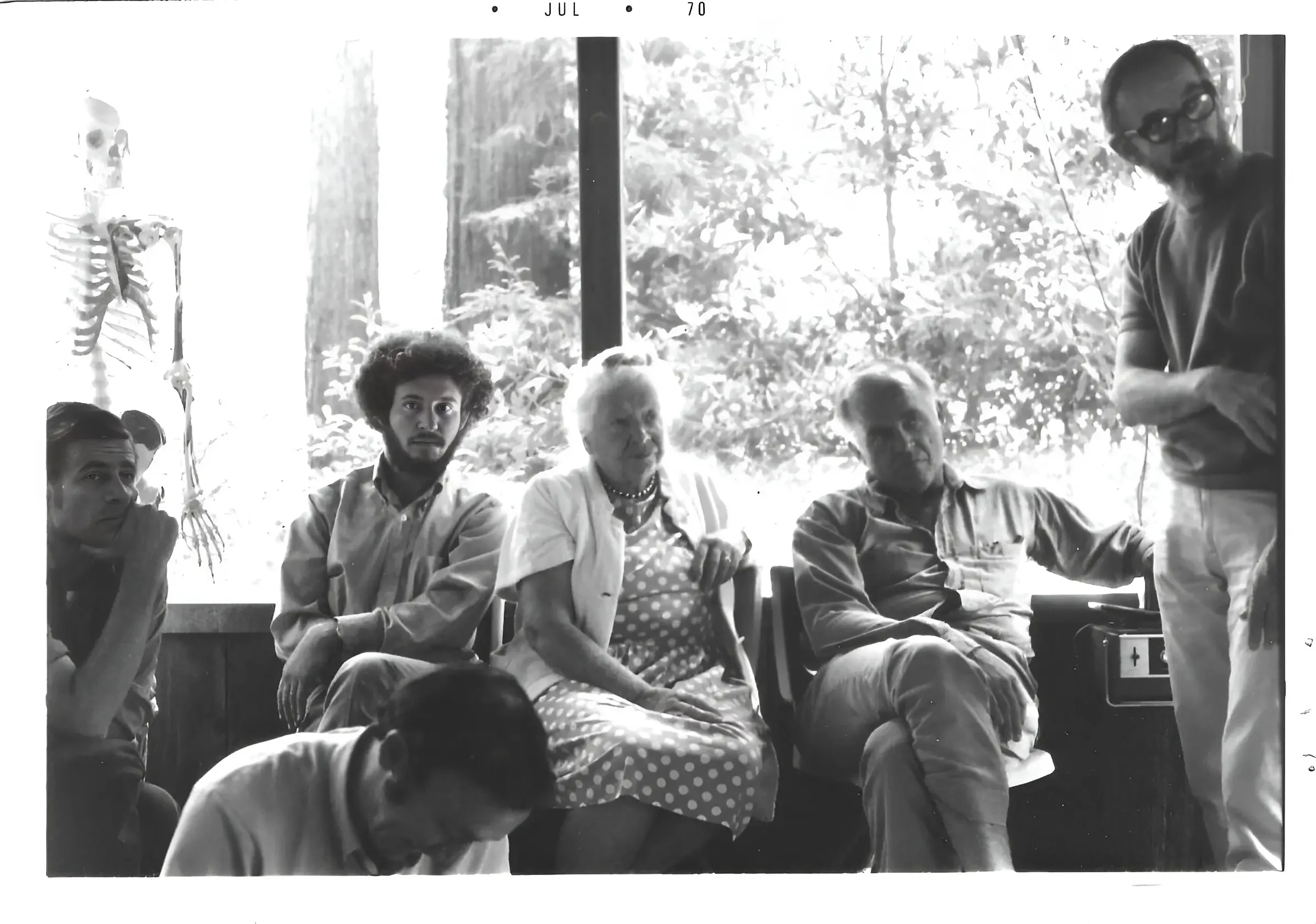
In the 1960s and 70s, Dr. Ida Rolf taught a small group of students, focusing on one core principle: organizing the human body in gravity through hands-on work with fascia. This work became known as Rolfing®.
As interest grew, the Rolf Institute was formed to teach and expand this method. Over time, the curriculum evolved—incorporating movement re-education, craniosacral approaches, and broader interpretations of how the body functions.
Where the Guild Comes In
Some of Ida Rolf’s most senior students—Peter Melchior and Emmett Hutchins, both among her first Rolfing teachers—became concerned that the work was drifting away from its original structural focus.
They believed that Ida’s core insight was grounded in the physical body: that lasting change comes from precise, hands-on work in the tissue, guided by a highly trained eye.
To preserve that approach, they founded the Guild for Structural Integration.
The Guild’s mission was simple: stay true to Ida Rolf’s original work. Keep the focus on structure. Keep the work grounded in the body.
Why I Chose the Guild for Structural Integration
I, Joel Gheiler, chose to train at the Guild for Structural Integration in Boulder rather than the Rolf Institute because I wanted to stay as close as possible to Dr. Ida Rolf’s original teachings.
I wasn’t looking for a modern interpretation or an expanded system.
I wanted the foundation.
The Most Important Difference: Learning to See
One of the biggest differences between the two schools—and one that has a direct impact on the quality of work you receive—is the Guild’s auditing phase.
For an entire semester, you don’t work on clients.
You observe.
You study bodies. You learn to see patterns—compensations, asymmetries, subtle shifts in how someone stands and moves in gravity. This is not a quick skill. It takes time. Repetition. Focus. Practice.
A lot of practice.
This is where many practitioners today are missing something essential—not because they lack ability, but because they often weren’t given the time to develop this skill deeply.
Clients are often surprised that I can identify structural patterns even through clothing. But there’s nothing mysterious about it. It’s simply a trained eye—developed through hours of observation before ever putting hands on a body.
And that ability to see changes everything.
Because when you can truly see the structure, your work becomes more precise, more efficient, and more effective.
Structural Integration vs Rolfing in Boston
If you’re searching for Rolfing in Boston, it’s important to understand that “Rolfing®” is a trademarked term associated with the Rolf Institute.
The work I practice is Structural Integration, rooted directly in Dr. Ida Rolf’s original method and lineage through the Guild for Structural Integration.
While the names differ, the foundation remains the same: working with fascia and structure to help the body organize more efficiently in gravity.
Staying True to the Work
The Rolf Institute has contributed significantly to the evolution of this field, including work in movement re-education and craniosacral approaches.
But for me, the question is always: what is the foundation?
No matter what direction you explore—movement, energy, or perception—it has to come back to the body.
Back into the tissue.
Back into the fascia.
Back into structure.
That’s where Dr. Ida Rolf’s work lives.
Structural Integration in Boston: A Different Standard
If you’re looking for Rolfing in Boston, what you’re really looking for is results—less pain, better movement, and a body that feels more balanced and supported.
My work is grounded in that original structural approach, developed through intensive training at the Guild and a strong emphasis on seeing before doing.
If that resonates with you, the next step is simple:
Experience Structural Integration in Boston for yourself. an appointment with Joel Gheiler, Certified Guild Rolf Practitioner, Click Here