Rolfing Aphorism 3: Put It Where It Belongs — And Get It To Move (a myofasical release approach to Somatic Therapy in Boston)
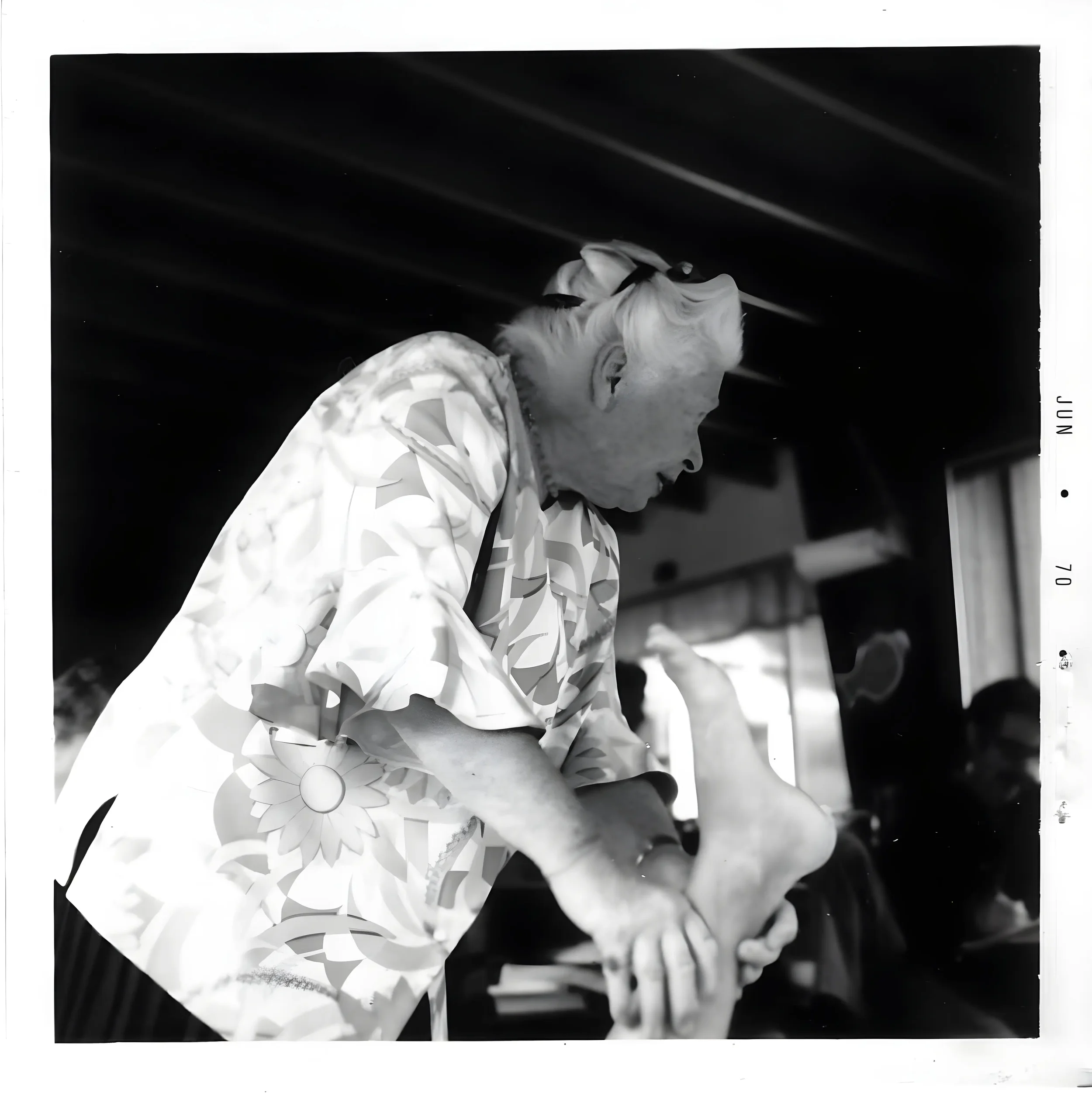
Aphorism 3: Put It Where It Belongs — And Get It To Move
Rolfing, Myofascial Release, and Somatic Therapy in Boston
“Put it where it belongs and get it to move.” — Ida Rolf
When Ida Rolf developed the structural work that would later inspire Rolfing, she understood something foundational:
The body only truly changes when structure and function change together.
Today many people searching for Rolfing in Boston, myofascial release in Boston, or somatic therapy in Boston are seeking relief from pain, restriction, and postural imbalance. What Dr. Rolf discovered decades ago is that lasting change does not come from force alone. It comes from reorganizing the body’s structure and teaching the nervous system to move differently.
Movement is not something we do.
Movement is something we are.
Breath moves. Blood circulates. Muscles respond to neural signals. Even standing upright requires constant adaptation to gravity. What we call movement is organized motion — the nervous system expressing itself through muscle and fascia within the gravitational field.
Flexors and extensors create this orchestration. One shortens, the other yields. One reaches outward, the other returns inward. In a balanced system, this dynamic tension creates ease and efficiency.
But life alters structure.
Injury, repetitive strain, emotional holding, and long-term postural habits create torque in the body. When muscles are torqued, they often migrate laterally — drifting away from their optimal relationship to the midline. As they shift outward, they tend to shorten.
Shortened muscle is not merely tight.
It is structurally displaced.
Ida Rolf observed that to restore natural length, tissue frequently needed to be brought back toward the midline. By guiding laterally displaced structures medially, the practitioner could restore a muscle’s inherent length and its proper orientation within the fascial network.
This is one of the key principles behind myofascial release. The fascial network organizes the body’s structure. When fascial layers become restricted, muscles lose their ability to lengthen and coordinate properly.
Through careful fascial work — what many people recognize today as myofascial release — restrictions soften and deeper structural relationships can be restored.
Length was not forced.
It was reclaimed through repositioning.
This is the deeper meaning of “put it where it belongs.” It is not simply about loosening tissue. It is about restoring coherent structural relationships — particularly in relation to the midline and gravity — so muscles can express their natural length without strain.
But Dr. Rolf also understood something equally important.
Structure alone does not hold.
If tissue is repositioned but the nervous system continues to move through old habits, the body will return to the same patterns. Lasting change requires the nervous system to participate.
This is where movement — and what many people today call somatic therapy — becomes essential.
The second half of the aphorism makes this clear:
“And get it to move.”
Movement while tissue is reorganized serves a neurological purpose. It allows the nervous system to experience new structural possibilities.
Through guided movement, a client begins to:
Re-pattern how motion is initiated
Experience the eccentric (lengthening) phase of muscle activity
Learn to begin movement by yielding and lengthening rather than gripping and contracting
These principles overlap with somatic therapy, which emphasizes awareness of how movement originates and how the nervous system organizes the body in space.
Most people initiate movement through contraction. They grip first, then move.
But efficient movement often begins with controlled lengthening — an eccentric response that allows the body to organize and flow into motion.
By asking a client to move while tissue is lengthened and reorganized, the work gives the nervous system a new strategy:
Initiate.
Lengthen.
Organize.
Move.
Rather than:
Contract.
Brace.
Force.
Without movement, structural change fades.
Without structural reorganization, movement simply reinforces distortion.
When Ida Rolf developed the structural work that eventually inspired Rolfing, she built a method that integrated both principles. Structural alignment toward the midline restored natural length within the fascial system — work that today is often associated with myofascial release.
At the same time, guided movement and awareness — closely related to modern somatic therapy — ensured that the nervous system could learn to use the new structure.
Over time — classically through the Ten Series — the body’s movement memory evolves. Muscles no longer migrate laterally into shortening patterns. Flexors and extensors regain dynamic balance. Motion becomes less about effort and more about organized responsiveness within gravity.
The goal is not simply flexibility.
The goal is integration — structure and function unified.
Rolfing, Myofascial Release, and Somatic Therapy in Boston
Many people searching for Rolfing in Boston, myofascial release in Boston, or somatic therapy in Boston are looking for a way to resolve pain, improve posture, and move more freely.
At Boston Rolf, the work practiced is The Rolf Method — Ida Rolf’s original structural integration technique that predates the modern term Rolfing.
This method works with the fascial system through precise myofascial release, helping restore structural relationships within the body — often bringing tissue back toward the midline so muscles can regain their natural length.
But structural change alone is not enough.
Movement education and body awareness — principles shared with somatic therapy — are integrated into the work so that the nervous system can learn new, more efficient ways of moving.
This combination allows structural change to become lasting change.
Put it where it belongs.
Get it to move.
When the body’s structure is reorganized and movement patterns evolve, the result is not simply less tension.
The body reorganizes itself in gravity with greater balance, coordination, and ease.To make an appointment with Joel Gheiler, Certified Guild Rolf Practitioner, Click Here