Ida Rolf Rolfing Aphorism 2
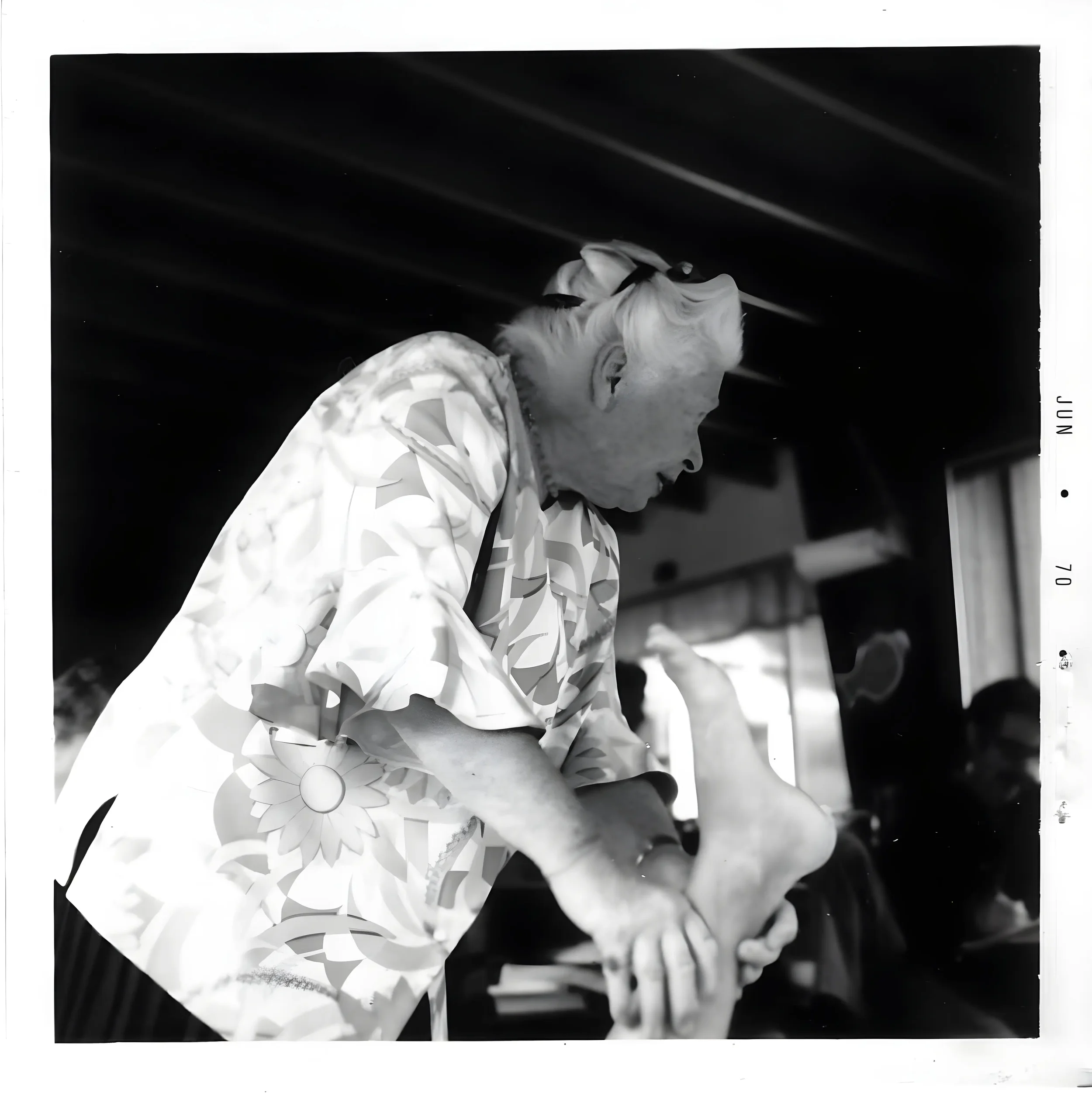
Aphorism 2: If At First You Don’t Succeed, Go Somewhere Else
“If at first you don’t succeed, get the hell out and go somewhere else.”
— Ida Rolf
Few statements capture Dr. Rolf’s teaching style more clearly than this one.
Direct. Unapologetic. Precise.
But beneath the humor lies one of the most important principles in the original Rolf Method of Structural Integration: think globally, not locally.
What Did Ida Rolf Mean?
Dr. Rolf was not suggesting force. She was rejecting it.
If working on a shoulder does not produce change, the answer is not more pressure. If a low back remains tight, the solution is not to “hammer” it.
The body is an interconnected fascial web. Tension in one region is often organized by patterns elsewhere. Sustainable change requires understanding how the whole structure relates within gravity.
One of the reasons Dr. Rolf emphasized this aphorism was to train practitioners to think holistically and globally:
What else must shift to allow this change?
Where is the organizing strain pattern?
How does this area relate to the entire structure?
Her background as a scientist deeply informed this systems-based thinking. After earning her Ph.D. from Columbia University and conducting research at the Rockefeller Institute, she approached the body not as isolated parts, but as an integrated biological network.
Structure Determines Function
Through decades of exploration — including yoga, connective tissue research, and hands-on experimentation — Dr. Rolf developed a systematic approach to working with fascia.
Fascia is composed largely of collagen fibers suspended in a fluid matrix. When organized and adaptable, tissue can feel supple and responsive. When chronically strained, it may feel dense or resistant.
The goal of Structural Integration is not to “fix” a body part.
It is to improve overall structural relationships so the body can balance more efficiently in gravity.
And sometimes, that means working somewhere entirely different from where discomfort appears.
Why This Aphorism Still Matters
Modern bodywork culture often equates intensity with effectiveness.
Dr. Rolf taught something more refined:
Precision over force
Strategy over repetition
Whole-body thinking over symptom chasing
“If at first you don’t succeed” is a reminder that intelligent structural work requires perspective.
The body reorganizes when the correct relationships are addressed — not when pressure is increased.
A Note for Those Searching for Rolfing in Boston
Many people today search online for Rolfing in Boston. It is helpful to understand that the term “Rolfing” emerged from the system of Structural Integration originally developed by Dr. Rolf.
Her early work — often referred to as the Rolf Method — emphasized global structural balance and working with the entire fascial network rather than isolating parts.
At Boston Rolf, sessions are grounded in that original Rolf Method approach to Structural Integration. The emphasis is on holistic reorganization and structural balance in the spirit of Dr. Rolf’s foundational principles.
The focus is not on chasing symptoms.
It is on understanding what else must shift to allow meaningful change.
The Ten-Series as Structural Education
The traditional ten-session series developed by Dr. Rolf was designed as a progressive reorganization process.
Each session builds on the previous one. Patterns unfold. Relationships shift. The body gradually finds greater ease within gravity.
When practiced with sensitivity and patience, the process becomes less about treatment and more about structural education — for both practitioner and client.
Dr. Rolf’s aphorism remains timeless because it reflects a larger truth:
The body is a whole.
If change is not happening where you expect it, the answer may not be more effort.
It may be a broader view.